In the beauty and wellness industry, innovation moves quickly. Brands are under pressure to launch new technologies, improve product performance, and bring differentiated solutions to market faster than ever before. As a result, many development teams place strong emphasis on rapid prototyping, which promises speed. With modern CAD tools, fast manufacturing techniques, and early sample fabrication, it is now possible to move from concept to prototype in a short time.
However, speed alone does not guarantee success.
Many development projects run into delays not because prototyping is slow, but because the product was not fully understood before prototyping began. When teams move too quickly into engineering or tooling, they often discover conflicts later in the process. These issues lead to redesign, additional testing, and repeated prototype cycles.
High-performance prototypes are not created by moving fast from the beginning. They are created by building a clear understanding of the product first. At Nuon Medical, product development always begins with structured product understanding. Through the C.U.R.V.E development framework, brands and engineers align on performance, formulation behavior, user experience, and regulatory constraints before engineering work begins. This structured approach creates clarity, reduces development risk, and transforms rapid prototyping into an efficient and predictable step in the product development process.
Rapid prototyping has become a popular concept across many industries. The idea is simple. Build a prototype quickly, test it, refine it, and repeat the process until the product works.
While this approach can work in certain contexts, it often creates hidden inefficiencies in complex product development environments such as cosmetic technology or device-integrated packaging. When teams rush into prototype creation without a clear definition of the product system, important questions remain unanswered. These questions may only appear after the prototype is built and tested.
For example, the geometry of a packaging applicator may not interact well with the viscosity of the formula. A heating component designed to improve absorption may affect ingredient stability. Electrical components may introduce compliance requirements that were not initially considered. Each of these discoveries forces the team to revisit earlier decisions. Engineering must adjust the design. New prototypes must be produced. Testing must be repeated.
This situation is common in many development projects. Teams move quickly into building prototypes because they believe speed will reduce time to market. In reality, the lack of structured product understanding shifts the complexity into later stages of the product development process. Rapid prototyping becomes efficient only when the foundation of the product is clearly defined first.
Many people assume the design of beauty packaging begins when engineers start building CAD models or defining mechanical components. In reality, the process begins earlier. Before the engineering design process starts, development teams must first understand the relationship between the skincare or cosmetic formulation, the packaging system, and the user.
Four areas are particularly important.
The development team must clearly define what the product is meant to achieve. This may include improving ingredient absorption, stimulating collagen production, or simplifying the skincare routine for the user. Clear performance targets help guide engineering decisions.
The behavior of the formulation plays a critical role in packaging design. Different formulas have different viscosities, ingredient sensitivities, and compatibility requirements. Understanding these characteristics helps determine how the packaging should deliver the product effectively.
The way the consumer interacts with the packaging also affects performance. How the applicator moves across the skin, the pressure applied during use, and the treatment duration all influence the effectiveness of the skincare routine.
Advanced beauty packaging may include electronic components, heating elements, or light-based technologies. These features can introduce additional safety testing and compliance requirements. Understanding these constraints early helps avoid major design changes later in development.
When these factors are clearly defined before engineering begins, the beauty packaging design process becomes far more efficient and predictable.
Once the product system has been clearly defined, development can move forward using a structured framework. At Nuon Medical, this process is guided by the C.U.R.V.E model.
The C.U.R.V.E framework connects several key elements that shape the development of technology-enhanced beauty packaging.
Development begins with the end user. Understanding who the customer is, what skincare concerns they want to address, and how they will interact with the product helps define the direction of the packaging design.
The next step focuses on the formulation itself. Engineers and formulation specialists evaluate viscosity, active ingredients, stability considerations, and compatibility with packaging materials. This analysis helps identify opportunities to improve absorption and performance.
Instead of designing packaging independently from the formulation, the delivery method is analyzed based on how the skincare or cosmetic formula interacts with the skin in real usage conditions. This approach helps determine the most effective applicator design and packaging architecture.
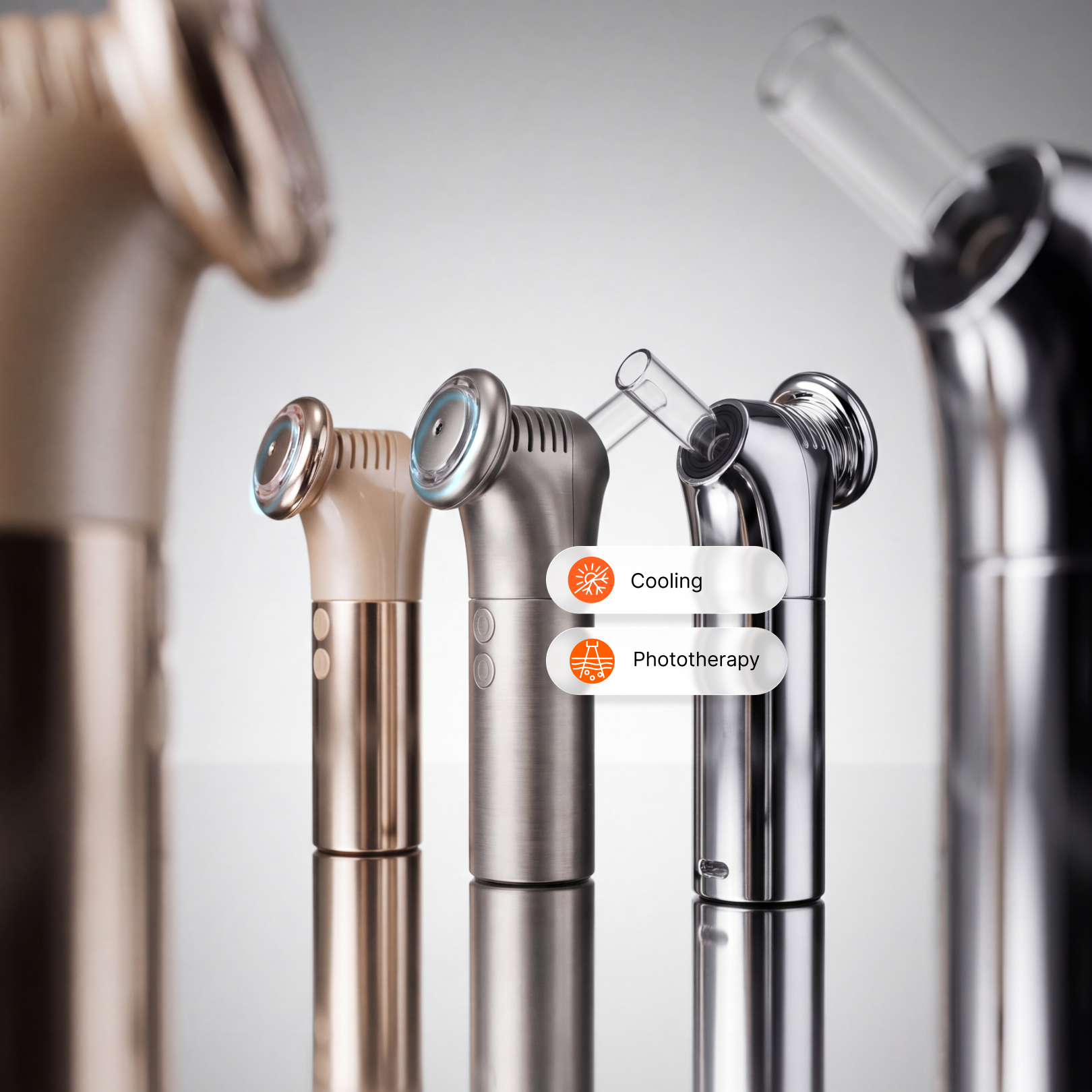
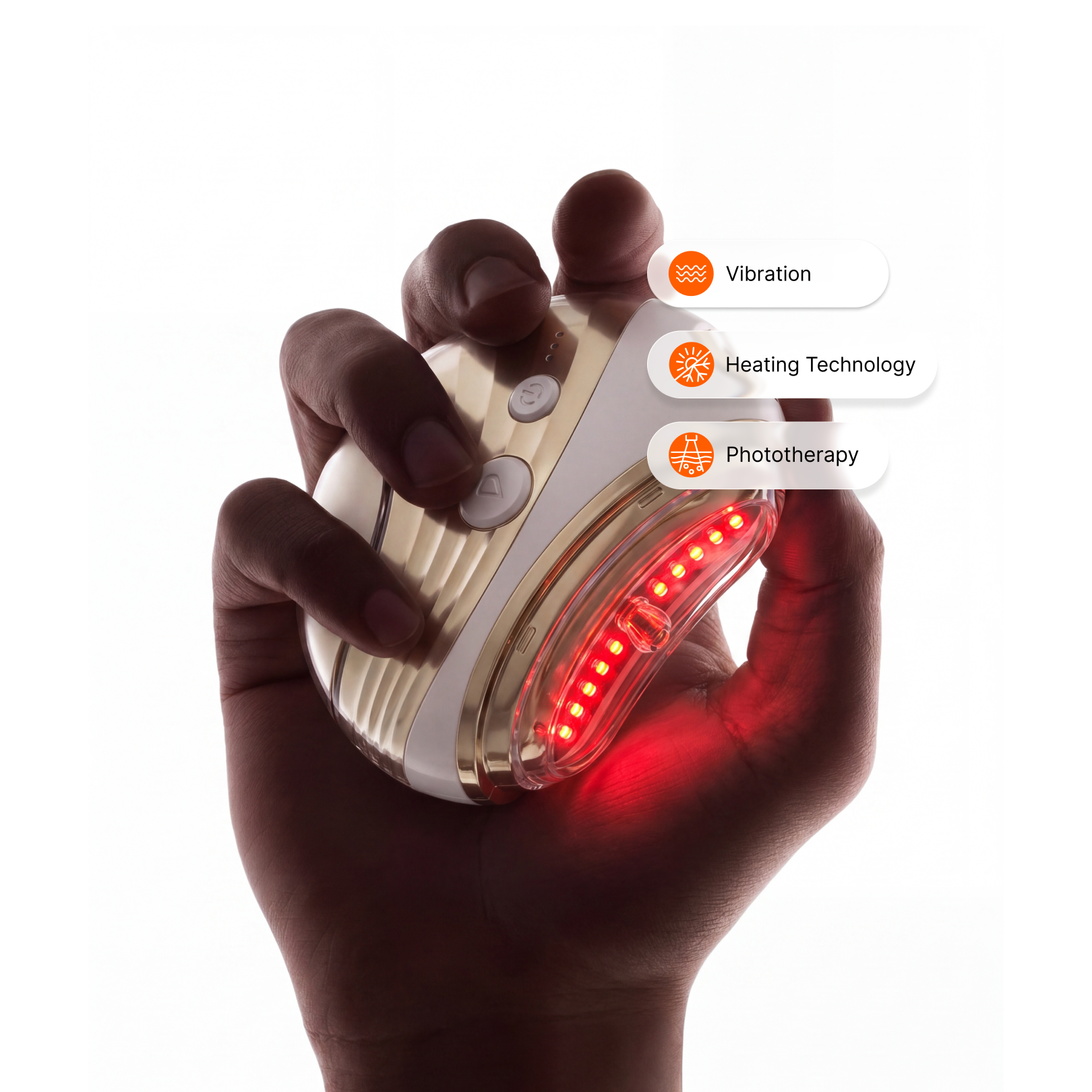
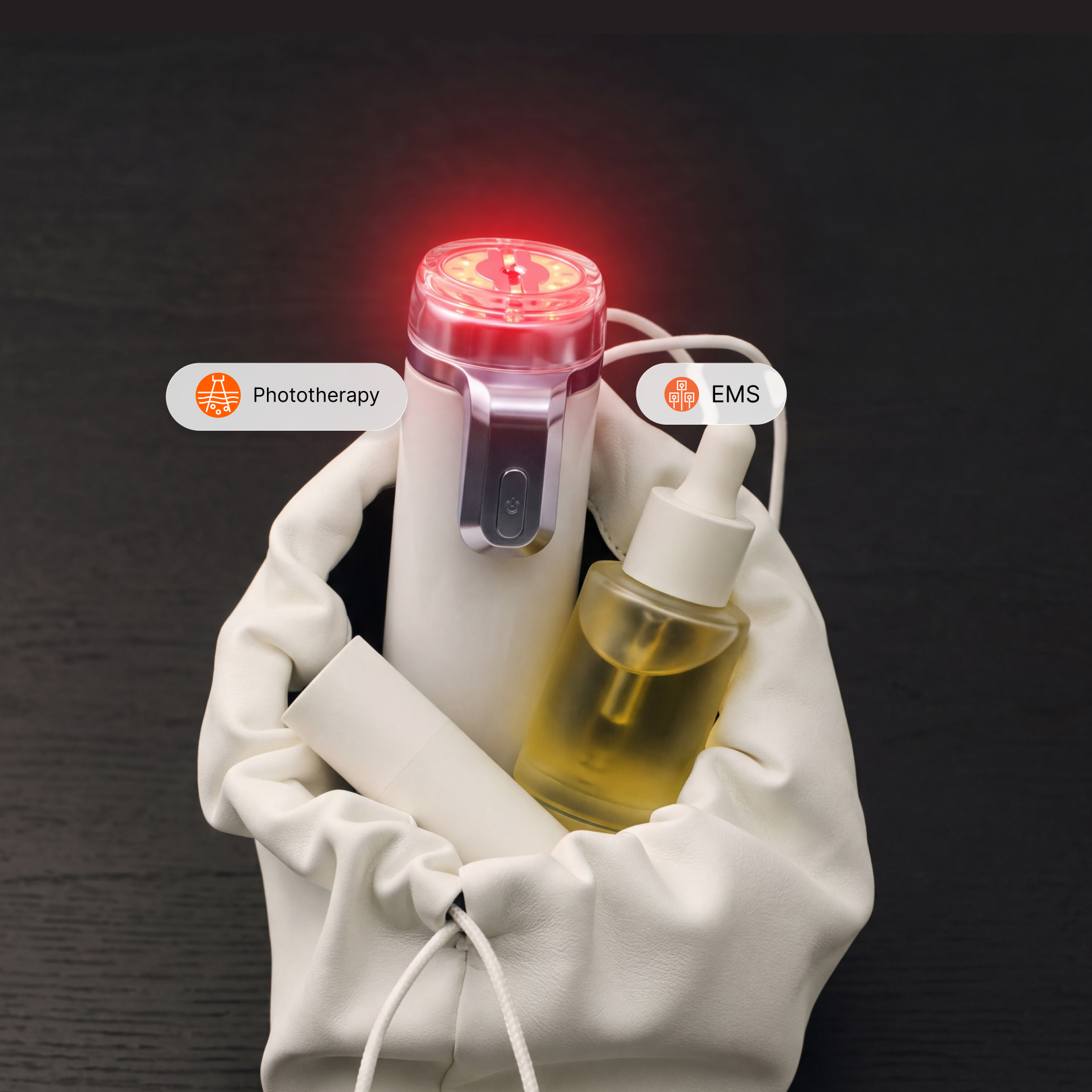
Once the product system is understood, technologies can be integrated to enhance performance. These may include phototherapy, thermal activation, vibration, or microcurrent systems designed to support the biological activity of the skincare formula.
By connecting these elements, the C.U.R.V.E framework aligns engineers, formulation specialists, and product developers around a shared understanding of the product. This alignment strengthens decisions across the new product development process and reduces engineering risk.
Once product understanding is established, the new product development process transitions from abstract concepts to high-performance reality with maximum efficiency. At Nuon Medical, this follows a rigorous, linear progression: it begins with defining performance goals, formulation behavior, and regulatory constraints, followed by reverse-engineering the delivery method to determine the optimal packaging architecture.
This system logic feeds directly into the engineering design process, where mechanical and electronic elements are integrated. Instead of reactive troubleshooting, rapid prototyping at this stage serves as functional validation to confirm that the delivery system and formulation interact as intended. The process then concludes with the "golden sample" for final compliance and a seamless transition into scalable production. By anchoring the product design process in deep initial understanding, prototypes effectively confirm design logic rather than merely testing uncertain assumptions.
Innovation in beauty packaging continues to accelerate, and brands are constantly looking for ways to develop new products faster.
However, the most successful products are not always the ones developed the fastest. They are the ones built on a clear understanding of how the skincare or cosmetic formulation, the packaging system, and the user experience work together. By prioritizing early product understanding, development teams can reduce engineering risk, improve collaboration, and accelerate the overall product development process.
At Nuon Medical, this philosophy shapes every development partnership. Through the C.U.R.V.E framework and a structured engineering workflow, brands move from concept to scalable beauty packaging prototypes with greater confidence.
Contact us at info@nuonmedical.com or visit www.nuonmedical.com to start your product evolution.
.svg)
.svg)

.svg)

.png)

.png)


.svg)

.svg)
.svg)
.svg)
.svg)
.svg)
.svg)
.svg)
.svg)

.svg)
.svg)


.svg)